Understanding Weather Radar for Kiteboarding Safety
Intro
Weather radar is a critical tool for anyone who spends time outdoors, especially in a climate like that of Parrish, Florida. This region, known for its sunny skies and breezy conditions, attracts kiteboarding enthusiasts year-round. But with the weather being as unpredictable as it can sometimes be, understanding how weather radar works can make all the difference between a thrilling kiteboarding session and an unexpected encounter with severe weather.
In this guide, we will explore the various components of weather radar systems, how they function, and how they can be specifically applied to enhance the safety of sports like kiteboarding in Parrish. By examining historical weather patterns and real-time data from radar systems, we'll provide valuable insights that will enable kiteboarders and outdoor enthusiasts to make informed decisions before hitting the water.
Gear and Equipment
When it comes to kiteboarding, having the right gear is paramount. Understanding how weather radar influences the choices we make regarding our equipment can enhance safety significantly. The right gear not only impacts performance but also safety during unforeseen weather changes.
Essential Kiteboarding Gear
- Kite: The heart of kiteboarding; selecting the right size and type depends on wind conditions.
- Board: Every kiteboarder has their favorite—choose one that matches your skill level and riding style.
- Harness: An often-overlooked component, the harness transfers the power of the kite to the rider.
- Safety Leash: This is a must; it keeps you connected to your kite, allowing you to safely release it in an emergency.
- Helmet and Impact Vest: Protect your noggin and torso; safety gear can make a difference in case of falls or collisions.
Choosing the right equipment involves not just personal preferences but also considerations for local weather. It’s wise for kiteboarders in Parrish to be vigilant about weather updates. Real-time radar can help determine if conditions are right for a fun day on the water or if it’s best to stay on land.
Maintenance Tips for Kiteboarding Equipment
Keeping your gear in tip-top shape extends its life and ensures safety. Here are some handy maintenance tips:
- Rinse with Fresh Water: After each use, especially in saltwater, rinse your gear to prevent corrosion.
- Inspect Regularly: Look for any wear and tear—small issues can turn into big problems on the water.
- Store Properly: Avoid leaving equipment in direct sunlight for extended periods; this can degrade materials.
- Tension Lines Correctly: Ensure your kite lines are not tangled and have consistent tension before launching.
Being aware of radar developments in the area can inform decisions about maintenance schedules. For instance, if storms are common this season, taking better care of equipment might help it withstand harsher conditions.
Understanding Weather Radar Basics
To appreciate how radar impacts kiteboarding, one must understand how these systems work. Weather radars, primarily Doppler radar systems, emit radio waves that bounce off precipitation and other atmospheric elements. The time it takes for the waves to return helps meteorologists assess several factors such as:
- Precipitation Intensity: Whether it’s a drizzle or a downpour, radar can identify how much rain is falling.
- Wind Speed and Direction: Doppler radar can detect shifts in wind patterns, which is invaluable for kiteboarders.
The information gleaned from radar allows kiteboarding enthusiasts in Parrish to plan their outings wisely. Monitoring weather patterns via websites like NOAA Weather can be incredibly beneficial for keeping informed and safe.
"Making informed decisions based on radar data can significantly enhance your kiteboarding experience, mitigating risks associated with sudden weather changes."
Prelims to Weather Radar
Understanding weather radar is not just an academic exercise; it’s essential for residents and enthusiasts in Parrish, Florida, particularly for those who enjoy outdoor activities like kiteboarding. As anyone who has ever planned to hit the waters knows, sudden shifts in weather can turn a perfect day into a scary situation in no time. This section sketches an overview of what weather radar systems are, why they matter, and the specific benefits they bring to a community like Parrish.
Definition and Purpose of Weather Radar
Weather radar is a crucial technology used for monitoring atmospheric conditions. At its core, radar—short for Radio Detection and Ranging—transmits radio waves that bounce off precipitation particles in the atmosphere to provide detailed information about weather events. For example, when a storm is brewing overhead, the radar can indicate the intensity and movement of the rain, hail, or snow heading towards the area. This capability not only aids meteorologists in delivering timely forecasts but also equips kiteboarders and outdoor adventurers with vital data to make safe decisions on the water.
By offering real-time updates, radar systems help forecast severe weather, giving community members the heads-up they need to either seek shelter or postpone outdoor plans. Thus, radar serves as an essential tool, helping mitigate risks associated with unpredictable weather, a common occurrence in Florida.
History and Evolution of Weather Radar Technology
The journey of weather radar technology is fascinating. It began in the late 1930s when scientists first adapted radar systems, originally designed for military purposes, for meteorological applications. Early weather radar was not particularly precise but laid a groundwork that spurred advancements.
As decades passed, developments in technology dramatically improved radar systems. The introduction of Doppler radar during the late 20th century marked a significant breakthrough, allowing meteorologists to measure the velocity of precipitation. This innovation made it possible to predict storm paths more accurately; thus, it became a game changer for weather forecasting.
Additionally, advances in satellite technology and data processing have integrated with radar outputs, offering a multi-faceted view of the weather landscape. Thanks to computers, meteorologists can create detailed visualizations, presenting complex weather patterns in understandable formats. This evolution has been especially beneficial to communities like Parrish, where timely weather information can mean the difference between an enjoyable day on the water and a dangerous situation.
In summary, understanding weather radar is integral for anyone in Parrish who engages with the elements outdoors. It provides a safety net, fueling informed decisions while enhancing overall experience and enjoyment, particularly for kiteboarders navigating the diverse Florida climate.
Components of Weather Radar Systems

In order to grasp how weather radar functions, it's imperative to understand its core components. Each element plays a vital role in the overall efficiency and accuracy of radar systems, particularly in a region like Parrish, Florida, where weather can shift rapidly, affecting outdoor activities like kiteboarding.
Transmitter and Receiver Functions
A weather radar system fundamentally revolves around the transmitter and receiver. The transmitter emits pulses of radio waves, which travel through the atmosphere and reflect off precipitation particles, such as raindrops, snowflakes, or hail. This is where the complexity starts; not all pulses return to the radar in the same manner. The receiver captures these returning signals, and its sensitivity determines the effectiveness of the radar.
- Signal Strength: Stronger signals mean better detection of distant or faint precipitation. This is vital for accurate weather predictions.
- Range: The receiver can analyze echoes from various distances, allowing meteorologists to assess weather conditions over large areas.
- Processing Speed: A faster receiver helps in giving real-time updates, which are crucial for timely warnings to kiteboarders and other outdoor enthusiasts.
Understanding how the transmitter and receiver work together not only clarifies the mechanics of weather radar but also highlights why it's crucial for safety and planning in detail-oriented activities.
Radar Antenna Design
Next, let's take a look into the radar antenna design. This component isn’t just an accessory; it is integral to determining the radar's capability. The antenna serves as the eyes of the radar, directing emitted signals and collecting return echoes.
- Directional Capability: A well-designed antenna can focus on specific areas, which is essential when you want precise weather observations without unnecessary interference from surrounding areas.
- Beam Width: Antennas with narrower beam widths can provide more detailed readings, especially important in detecting small scale weather phenomena that could impact kiteboarding conditions.
- Rotation Speed: The speed at which an antenna can rotate affects how frequently it gathers data, influencing the radar's update rate and decision-making capabilities.
Being aware of these design considerations helps in appreciating the nuanced information that radar provides, especially concerning local conditions.
Signal Processing Techniques
Lastly, we must discuss signal processing techniques, which transform raw data into useful information. The effectiveness of radar isn't solely dependent on the transmitter and receiver; the post-processing of collected data is equally crucial.
- Echo Processing: Advanced algorithms filter out noise and enhance signal quality, effectively separating weather signatures from background interference. This is pivotal for accurate weather predictions.
- Doppler Technology: Doppler radar techniques allow for measuring the speed and direction of precipitation, essential for identifying severe weather patterns, such as tornadoes or thunderstorms.
- Data Visualization: Sophisticated visualization systems convert radar data into easy-to-understand maps and images. This graphical data is invaluable for kiteboarders, allowing them to assess the safety of local waters effectively.
In summary, the components of weather radar systems—transmitters, receivers, antennas, and processing techniques—work in tandem to provide a detailed picture of the weather. For residents and daredevils alike in Parrish, Florida, understanding these components enhances their ability to respond to changing weather, ultimately ensuring not just safety, but also better enjoyment of outdoor pursuits.
How Weather Radar Works
Understanding how weather radar operates is integral to appreciating its role in forecasting and safety. For residents of Parrish, Florida, radar systems are not just architectural marvels; they're vital tools for making informed decisions about weather conditions, especially for outdoor enthusiasts like kiteboarders. The ability to decipher weather situations becomes crucial in a region marked by rapidly changing climates. Consequently, grasping the inner workings of radar can protect lives and enhance recreational experiences.
Principles of Radar Technology
At its core, radar technology relies on emitting radio waves and analyzing the echoes that bounce back after hitting objects like precipitation or severe weather conditions. This transmission starts when the radar's transmitter sends out short bursts of electromagnetic waves, which travel at the speed of light. When these waves encounter precipitation, some of the energy scatters back towards the radar's receiver.
Here are a few basic principles behind how radar technology functions:
- Doppler Effect: This phenomenon helps to determine movement, measuring the frequency shift of the returned waves. If the rain or storm is approaching, the frequency increases; when it’s moving away, it decreases.
- Reflectivity: The intensity of the signal returned to the radar can tell us something about the size and density of raindrops or snowflakes and, by extension, the severity of the storm.
- Range: Radar systems can monitor expansive areas. Their range allows accurate weather assessments over vast distances, positioning them as essential tools for storm predictions.
Understanding these principles can directly impact kiteboarding safety. For instance, recognizing the Doppler shift may warn kiteboarders of incoming storms or high winds, giving them precious minutes to seek shelter.
Data Interpretation and Visualization
Once weather radar systems collect their data, interpreting that information accurately is crucial. The raw data about rainfall, wind speed, and storm intensity gets processed using advanced algorithms to create visual representations. These visualizations are what most users, including kiteboarders, actually interact with.
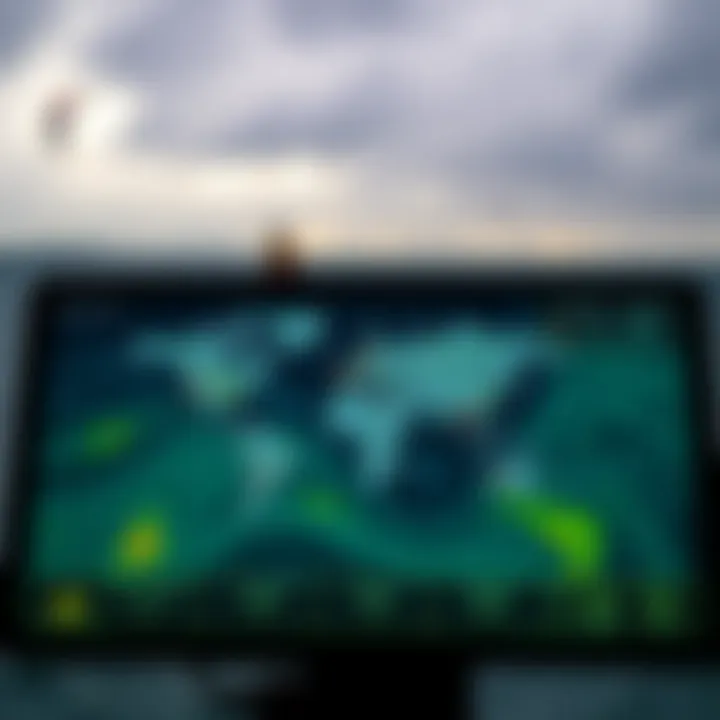
- Radar Images: These often look like colorful blobs on a screen, with brighter areas indicating heavier rainfall or more severe weather. Familiarity with these images helps users to assess conditions quickly. For example, a dark red area could signify a heavy downpour that might pose risks to outdoor activities.
- Graphical Displays: Typically, a live feed of radar data shows current weather conditions in real-time. Understanding how to read these displays can keep participants safe. For instance, if a kiteboarder sees an unexpected spike in wind patterns, they can safely land their kite and avoid potential hazards.
- Weather Maps: Tools like graphical overlays on maps enhance situational awareness. They help people visualize weather fronts, storm paths, and severe weather watches or warnings, valuable information for planning any outdoor activity.
"By staying informed about radar data, kiteboarders in Parrish can turn potential weather threats into manageable challenges, fostering an environment of safer outdoor experiences."
Weather Radar in Parrish, Florida
Weather radar systems play a crucial role in monitoring and understanding weather patterns in Parrish, Florida. This small community, surrounded by natural beauty and waterways, relies heavily on accurate weather data for various outdoor activities, especially kiteboarding. In a place where conditions can change on a dime, such technology is invaluable.
Weather radar not only helps predict rain showers but also tracks storms that could pose risks to safety. By understanding local weather patterns, residents and visitors can make informed decisions. If you're planning a day on the water or setting up a picnic, knowing whether the skies are clear or if a storm is brewing is essential.
Local Climate Overview
Parrish, located in Manatee County, experiences a humid subtropical climate, characterized by hot summers and mild winters. Precipitation is common, especially during the summer months when storm activity increases. On average, Parrish sees around 50 inches of rain annually, with the bulk of this falling during the wet season from May to October. The summer months bring tropical storms and the chance of hurricanes, making the role of weather radar incredibly important in providing timely alerts to residents and visitors.
Understanding the seasonal variations helps outdoor enthusiasts prepare better. Kiteboarding, for instance, flourishes in certain conditions, and being aware of factors like wind speed and direction is crucial.
Significance of Radar Data for Parrish Residents
For those living or spending time in Parrish, having access to real-time radar data can significantly enhance safety and enjoyment during outdoor activities.
- Emergency Alerts: Weather radar provides critical information during severe weather events, allowing residents to receive emergency notifications about storms, lightning, or floods.
- Planning Outdoor Events: Those engaging in activities like kiteboarding can check the radar for optimal wind conditions and avoid potential hazards posed by sudden weather changes.
- Community Awareness: Local authorities and organizations utilize weather radar data to inform the public about weather developments, fostering a culture of preparedness.
To sum it up, weather radar systems in Parrish serve not just as a tool for forecasting but as a vital part of daily life, ensuring that residents can navigate their environment keeping safety at the forefront. This transforms how kiteboarders and other outdoor lovers engage with nature, promoting not only enjoyment but also responsibility in outdoor pursuits.
Applications of Weather Radar
Weather radar has become essential in our daily lives, especially in areas prone to rapid weather changes like Parrish, Florida. Understanding its many applications not only enriches our knowledge but also enhances our safety, particularly for outdoor enthusiasts. Through the lenses of emergency notifications, sport implications, and safety considerations, we can fully appreciate how radar technology serves to benefit residents and adventurers alike.
Emergency Weather Notifications
When storms brew suddenly, every second counts. Weather radar systems play a pivotal role in emergency notifications, offering timely alerts that can be the difference between safety and danger. These systems detect severe phenomena like tornadoes, thunderstorms, and heavy rainfall, enabling meteorologists to send out warnings.
For instance, a storm cell detected via radar might prompt the National Weather Service to issue alerts to local news outlets and community platforms. As a result, residents receive warnings on their phones or through media before adverse conditions hit, giving them precious moments to take cover or alter their plans.
Some benefits of emergency notifications include:
- Timeliness: Alerts can be sent out almost immediately, saving lives and property.
- Specific Areas Targeted: With radar technology, warnings can be fine-tuned to specific locales, like Parrish, ensuring the right people get the right information.
- Versatile Communication Channels: Text messages, mobile apps, and even social media platforms can disseminate alerts, maximizing their reach.
"In 2021, a radar observation predicted a severe thunderstorm in Parrish that helped alert residents in time, leading to a safer outcome."
Implications for Outdoor Sports and Activities
For outdoor sports enthusiasts, particularly those engaging in kiteboarding, weather radar’s significance can't be overstated. Accurate weather information directly impacts the safety and enjoyment of activities on the water. You wouldn't want to be caught off guard by a sudden squall while kitesurfing. Weather radar helps identify not only imminent storms but also helps gauge wind patterns and rainfall, informing decisions about when and where to kiteboard.
Understanding weather conditions is critical because:
- Risk Mitigation: With access to real-time radar data, kiteboarders can avoid treacherous situations created by high winds or lightning.
- Optimized Performance: Knowledge about wind direction, which weather radar can reveal, aids in planning thrilling yet safe rides.
- Community Safety Standards: As more local organizations begin to recognize the role of radar, they are implementing safety protocols based on accurate data, elevating overall sports safety.
Kiteboarding Safety Considerations
Kiteboarding is an exhilarating sport but comes with its own set of risks, especially in rapidly changing weather. That's where weather radar truly becomes an unsung hero. A small misjudgment can lead to dangerous conditions. Knowing when to take to the skies and when to pack up can hinge on understanding radar data.
Some safety considerations include:
- Pre-Flight Checks: Always check radar maps before hitting the water. Look for any signs of heavy precipitation or wind shift.
- Utilize Local Resources: Many kiteboarding spots in Florida have partnerships with local meteorological services to provide timely updates on weather conditions.
- Emergency Preparedness: Ensure that you're equipped with safety gear and a reliable communication method. If radar indicates storm potential, have a game plan to exit the water swiftly.
Understanding Radar Images and Maps
Radar images and maps play a crucial role in understanding weather phenomena, especially in an area like Parrish, Florida, where outdoor activities like kiteboarding depend heavily on accurate weather forecasting. Being able to decipher these images enables residents and enthusiasts to make informed decisions, potentially avoiding hazardous conditions. In this section, we'll explore what radar displays are, how they're structured, and why they're indispensable for anyone interested in outdoor sports.
Reading Radar Displays
Radar displays typically illustrate precipitation intensity through various color gradients. Understanding these colors is the first step towards interpreting what’s happening in the atmosphere. For instance, shades of green often represent light rain, while darker greens and yellows indicate moderate to heavy rain. Reds may signify severe thunderstorms or heavy downpours.
Here are a few key elements to consider when reading radar displays:
- Base Reflectivity: This shows the intensity of precipitation, giving you an immediate sense of where the rain is falling.
- Velocity Data: It depicts wind patterns with arrows, indicating the direction of movement. This can be particularly useful for understanding gust fronts that might affect kiteboarding conditions.
- Echo Tops: This indicates how high the precipitation extends into the atmosphere, suggesting storm potential. Taller echoes usually mean more severe storms.
"The key to mastering radar images lies in consistent practice and familiarity with terminology. Knowing the colors and their meanings can make a significant difference during sudden weather changes."
Being adept at reading these displays can empower kiteboarders and outdoor enthusiasts, allowing them to check the weather before stepping onto the water. It provides real-time insights, ensuring a safer experience.
Interpreting Weather Patterns
Once you grasp the basics of radar images, the next challenge is interpreting the weather patterns they depict. Analyzing how different radar signals interact forms a crucial part of forecasting. In Parrish, sudden weather changes can turn an ideal day for kiteboarding into a risky endeavor. Here’s how to better understand weather formations through radar:
- Low vs High Pressure Systems: Radar can indicate areas of low pressure, often associated with storm systems, versus high pressure, which usually means fair weather. Tracking these systems can tell you when to stay on shore and when to hit the waves.
- Fronts: Cold fronts and warm fronts show a transition between different air masses. Recognizing these on a radar map helps inform if a storm might be brewing soon.
- Storm Tracking: Understanding how storms evolve on radar can assist in identifying severe weather. For example, a storm that starts as a small cell can intensify rapidly, and reading the signals allows for timely decisions.
Being familiar with these aspects not only improves kiteboarding safety but also enhances overall outdoor experiences. Adaptability is key, and understanding radar readings is an essential skill for anyone venturing outside.
This insight into radar images and maps sets the stage for better preparedness. Ultimately, knowledge is the best tool in tackling the unpredictable nature of Florida's weather.
Future of Weather Radar Technology
The future of weather radar technology plays a pivotal role in enhancing our ability to forecast weather, particularly for outdoor activities like kiteboarding in Parrish, Florida. As meteorologists and enthusiasts become increasingly aware of the specific weather conditions that can affect the safety and enjoyment of outdoor sports, advancements in radar technology are vital. Improved accuracy and reliability of weather predictions not only safeguard lives but also ensure that experiences on the water are both enjoyable and safe.
Advancements in Accuracy and Reliability
One of the most significant advancements in weather radar technology is the increase in accuracy. With the implementation of advanced algorithms and machine learning techniques, predicting weather patterns has become more precise. This means that kiteboarders and other outdoor enthusiasts can receive more timely and accurate data regarding storm formation, wind speeds, and precipitation.
- Doppler Radar Enhancements: One notable technique that has evolved is the use of Doppler radar. This type of radar can measure the velocity of objects, such as raindrops or wind, providing critical insights into storm dynamics. Enhanced Doppler systems can detect not only where a storm is but also how it is evolving, giving users a strategic advantage.
- Dual-Polarization Technology: This technique allows radar to send and receive both horizontal and vertical pulses, which improves the understanding of precipitation types and intensities. For kiteboarders, knowing whether rain is light or heavy can affect their decisions of whether to hit the water or stay ashore.
The integration of such technologies means that the information received from weather radar is not just about what is happening now, but also what to expect in the near future. Improved accuracy results in better decisions, whether that be launching a kite or planning a beach event.
Integration with Other Meteorological Tools
Future improvements in weather radar are also focusing on how these systems can integrate with other meteorological tools to create a more comprehensive weather monitoring approach. Imagine being able to seamlessly connect radar data with satellite imagery and ground station analysis.
- Synoptic and Numerical Weather Prediction Models: By connecting weather radar with numerical weather prediction models, the accuracy of forecasts can be significantly enhanced. These models use mathematical representations of atmospheric processes to predict future weather events. When combined with real-time radar data, the predictions become much more robust.
- Mobile Applications: With advances in technology, many radar systems are integrating with smartphone applications, allowing outdoor enthusiasts to check weather conditions on-the-go. This is especially beneficial for kiteboarders, who can access real-time updates about wind speeds and storm warnings straight from their favorite devices.
This integration not only assists kiteboarders in making informed decisions, it also provides a vital tool for instructors and gear manufacturers to promote safety and awareness.
Moreover, as weather radar systems evolve, open data initiatives can flourish, providing community access to valuable weather information. This could lead to stronger local networks of kiteboarders who share real-time updates with one another, fostering a culture of safety and camaraderie.
The future of weather radar technology, therefore, holds great promise. It is set not only to provide more accurate weather forecasts but also to create an interconnected web of meteorological tools that enhance safety and fun for outdoor recreational activities in Parrish, Florida.
Closure
Weather radar plays a vital role not only in forecasting but also in enhancing the safety of outdoor activities, notably in areas like Parrish, Florida. The discussion throughout this article has shed light on how these sophisticated systems operate and their critical importance for kiteboarding enthusiasts and outdoor adventurers. Staying informed about local weather conditions can mean the difference between a perfect day out and a potential disaster.
The Importance of Staying Informed
Keeping abreast of local weather patterns is no small feat, especially in a region where conditions can shift faster than a kite in high winds. The information relayed via weather radar informs residents about immediate threats such as thunderstorms, heavy rain, and wind shifts.
Consider the following benefits of being well-informed:
- Safety: Knowledge of impending weather events allows kiteboarders to avoid dangerous conditions, such as sudden gusts or lightning.
- Planning: Understanding local climatic trends helps in planning outings. For instance, knowing that storms typically roll in during late afternoons can lead to earlier sessions and safer experiences.
- Community Awareness: When everyone is informed, the local kiteboarding community can coordinate and support each other better. Active communication about changing weather through local groups or social media can enhance everyone's safety and enjoyment.
Staying connected to reliable sources like the National Weather Service or local news stations, and utilizing technology like smartphone weather apps tailored for the area, can help kiteboarders maintain a good grasp of any evolving situations.
Encouragement for Responsible Kiteboarding Practices
With every exhilarating ride comes the responsibility of ensuring safety—not just for oneself but for others sharing the waterway. Kiteboarding can be both thrilling and hazardous, particularly in unpredictable weather conditions. Here are several practices that can lead to safer experiences:
- Weather Checks: Before heading out, always consult radar images or weather apps. Check for real-time updates that could inform your decisions.
- Buddy System: Kite in groups whenever possible. Not only is it more fun, but having a few extra eyes can help spot dangerous conditions and assist in case of an emergency.
- Know Your Limits: Understand your own skill level and the limitations of your equipment. If the weather conditions look suspect, or if you feel unsure, it's always best to postpone your adventure.
- Training: Consider taking lessons or attending workshops on weather-related kiteboarding safety. Knowledge of local conditions and proper techniques can be invaluable.
"An ounce of prevention is worth a pound of cure." This timeless advice rings especially true for outdoor activities where weather can change in a heartbeat.
In summary, the weather radar not only aids in forecasting but also delivers critical information that enhances kiteboarding safety in Parrish. With a commitment to being informed and embracing responsible practices, kiteboarders can navigate the waters with confidence.